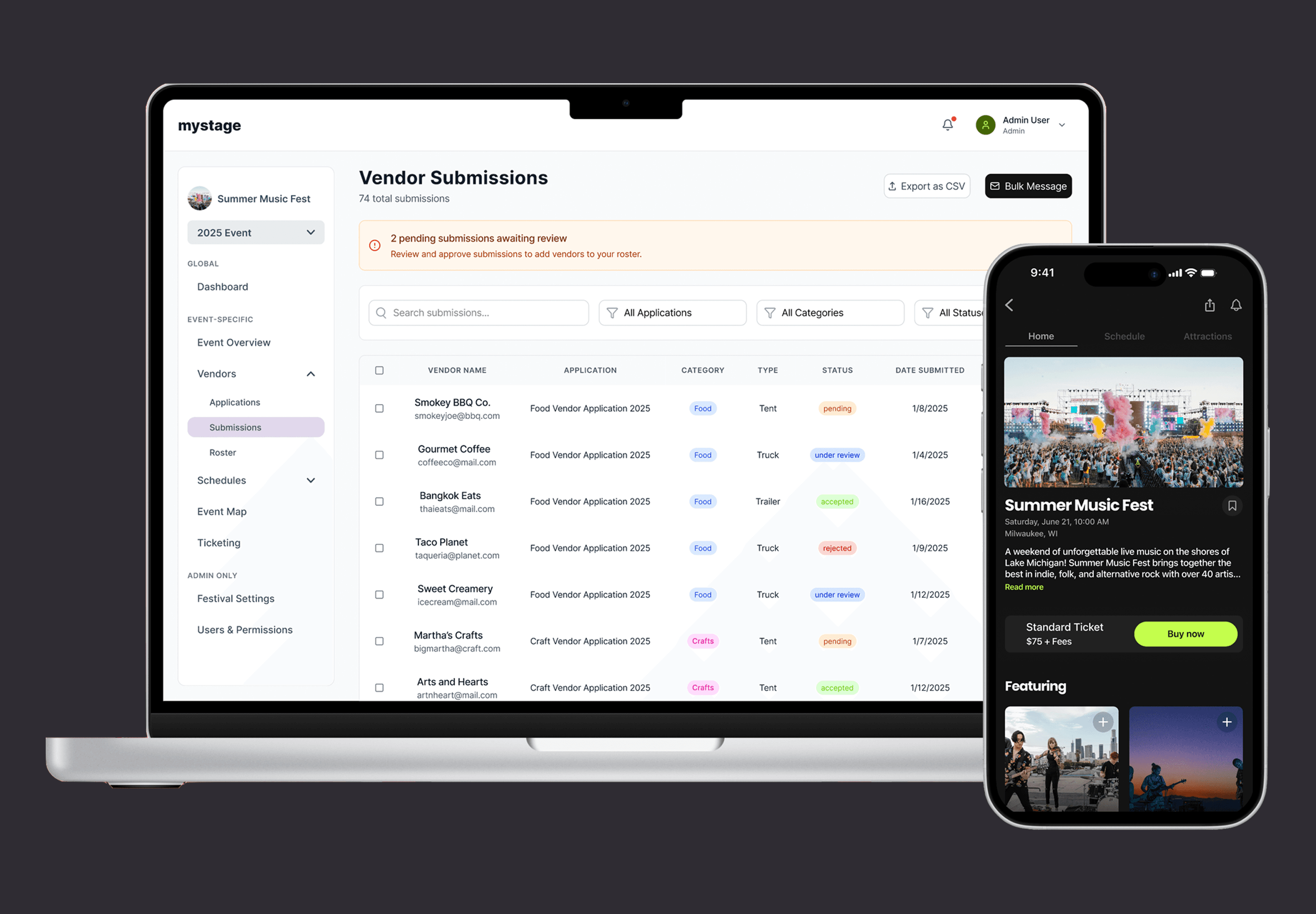
Project Details
Team
Katie Kunesh, Ben Dyleuth, Quang Mai, Anastasiia Haioshko
Timeline
November 2025 - Present
Tools & Methods
User interviews, Competitive analysis, Wireframing, Prototyping
Role
UX Designer
Overview
MyStage is a community events platform focused on festivals and local venues across the Midwest. The platform helps organizers create events, manage logistics, and support ticketing while serving vendors, volunteers, artists, and fans.
This case study documents how our team reframed MyStage's early product into a clear CRM-first system for event organizers with a complementary mobile experience, designed to support festival planning, day-of coordination, and fan discovery.
The Challenge
Festival organizers manage operations using spreadsheets, email, and multiple platforms. Large teams and manual processes make it hard to keep information organized throughout planning and the day of an event.
MyStage's products were not initially positioned to solve these problems. Our mobile app offered live event data fans could find on competing platforms, and our CRM was underdeveloped and disconnected from the app.
Our goal:
Develop CRM into a functional tool that solves operational problems while building an ecosystem where festivals using our platform would naturally bring fans to the app.
Goals & Constraints
Product Goals
- Develop the CRM into a functional tool
- Design based on real festival planning workflows
- Establish reusable UX patterns
- Document decisions to support future iteration
Business Goals
- Help organizers create and manage events
- Bring fans to the mobile app through festivals
- Improve discovery and engagement
- Support long-term user retention
User Research
Understanding the Users
We conducted interviews with three local festival organizers to understand their planning workflows and operational challenges.

Image: A virtual user interview with local festival organizers
Festival Admins
- Manage teams and schedules
- See data and updates
Artists & Vendors
- Participate in events
- Track schedule and payments
Fans
- Discover local events
- Navigate festivals quickly
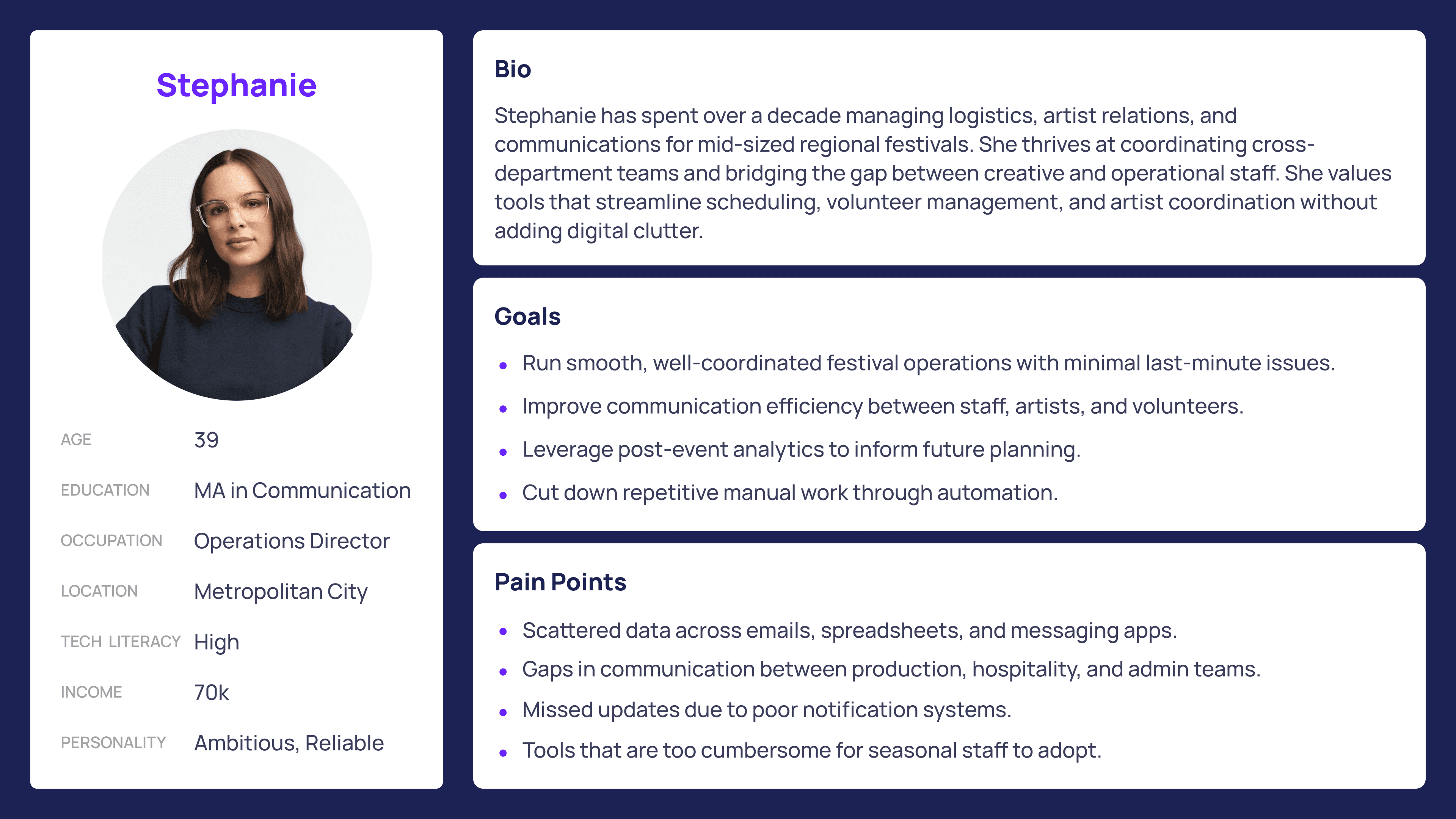
Image: Persona of a festival organizer
Research Insights
Pre-event planning
- Coordinate large, rotating teams with no centralized system
- Applications scattered across multiple platforms
- Information living in many places with no single source of truth
Day-of operations
- Organizers rely on ad-hoc texting
- Staff and volunteers needing clear direction and status updates
- Communication with the public is monitored through many different channels
Public experience
- Festival information is difficult to find and navigate
- Fans want quick answers about schedules, vendors, and locations
Market Analysis
Where Existing Platforms Fall Short
Discovery
- Bandintown
- Dice
- SeatGeek
Management
- Eventbrite
- Eventeny
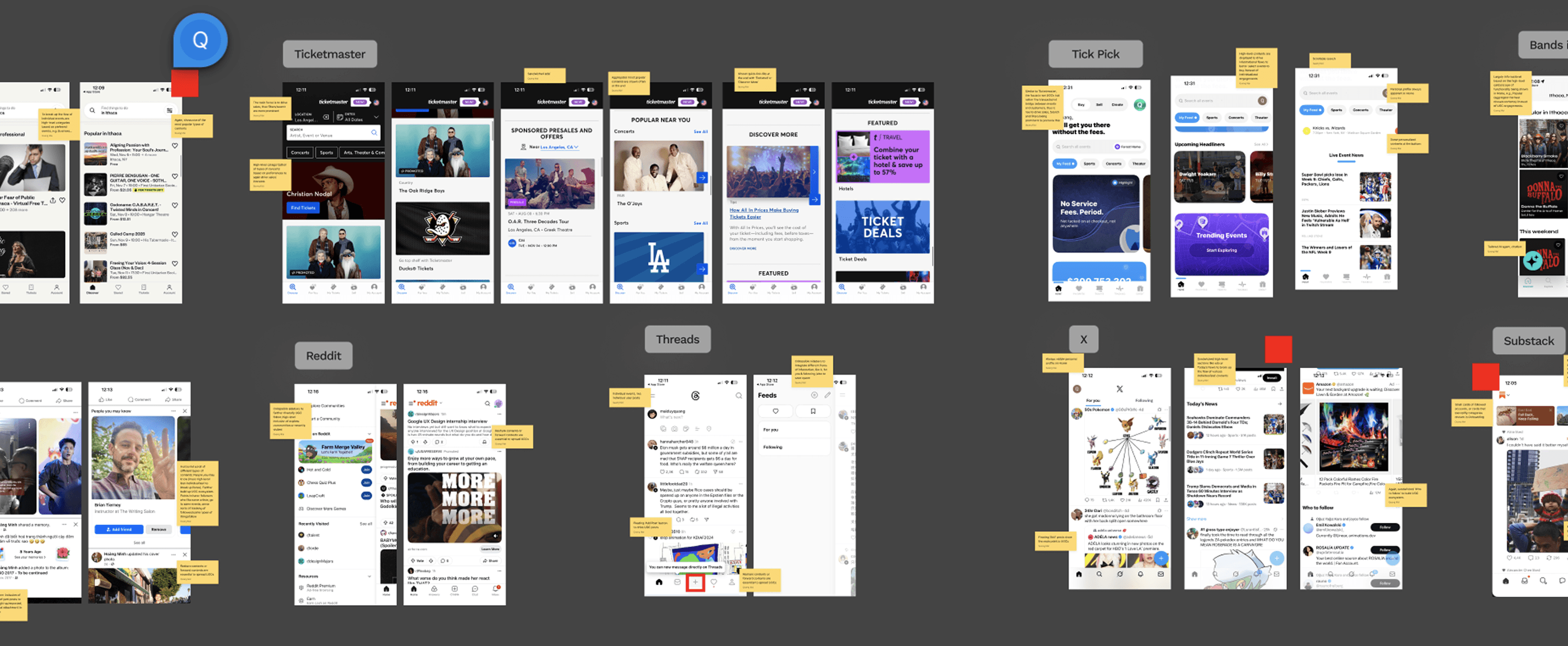
Image: Our team's competitive analysis notes
Key takeaways
- Most platforms optimize only for ticketing and discovery
- Event management tools lack effective coordination features
- Festival organizers still rely on external tools to fill workflow gaps
Opportunity:
Build a platform that supports the full festival lifecycle while connecting directly to the fan experience through our mobile app.
Product Strategy
We reframed MyStage as two connected products, each serving a distinct purpose within the ecosystem.
CRM
For festival organizers
- Manage vendor, artist, and volunteer applications
- Track approvals and assignments
- Design event layouts and schedules
- Centralize event logistics and data
Mobile App
For festival attendees
- Real-time event updates
- Quick navigation and mapping
- Coordination between volunteers and staff
- Fan retention post-event
The CRM manages operations while the mobile app makes that data available for attendees. Organizers using our CRM drive fans to the app for information, while app users discover more events and stay engaged with the platform.
User Flows & UX Frameworks
Role-Based Onboarding Flow
The role-based onboarding flow mapped how festival administrators, vendors, and artists enter the system.
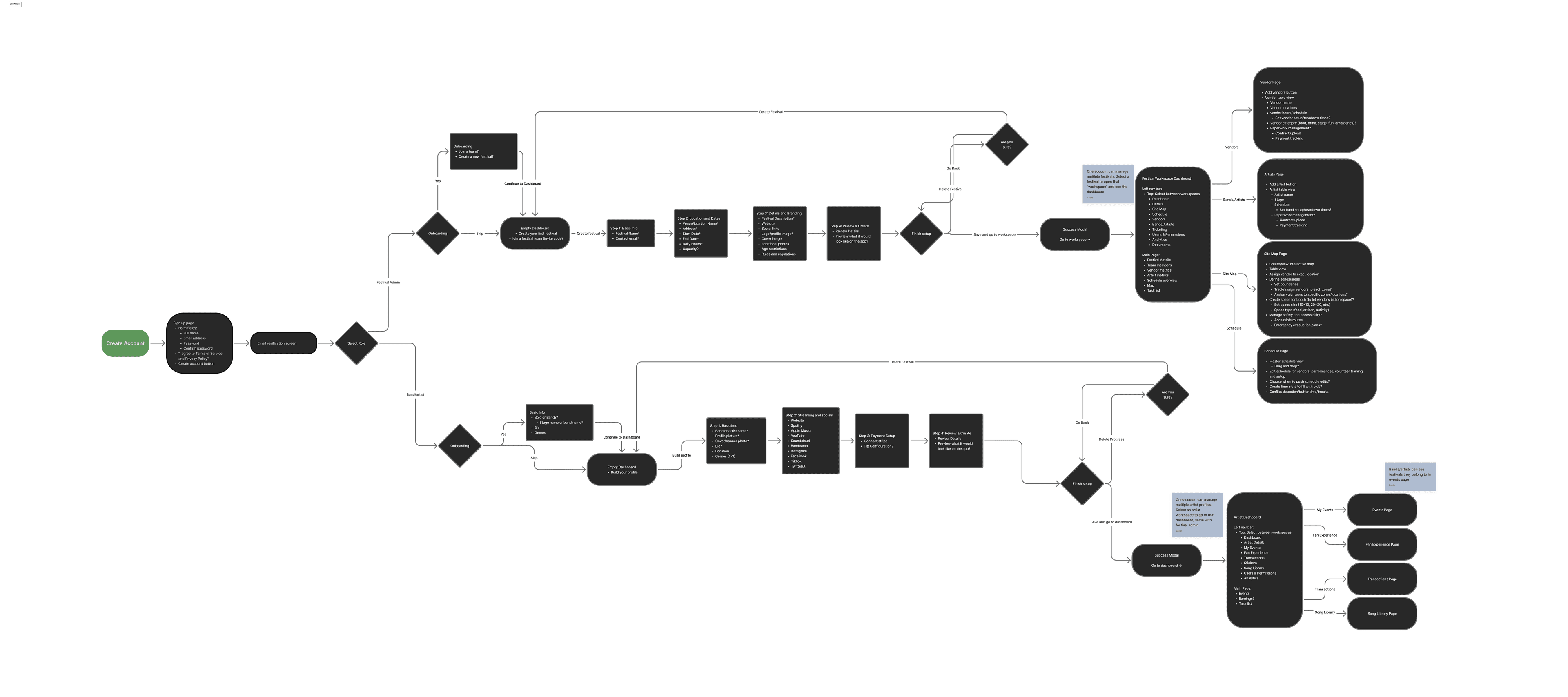
Image: Role-based onboarding flows for festival admins and bands/artists
Vendor Relationship Lifecycle
The vendor relationship lifecycle flow documented the vendor management process from application setup through post-event using our interview findings.
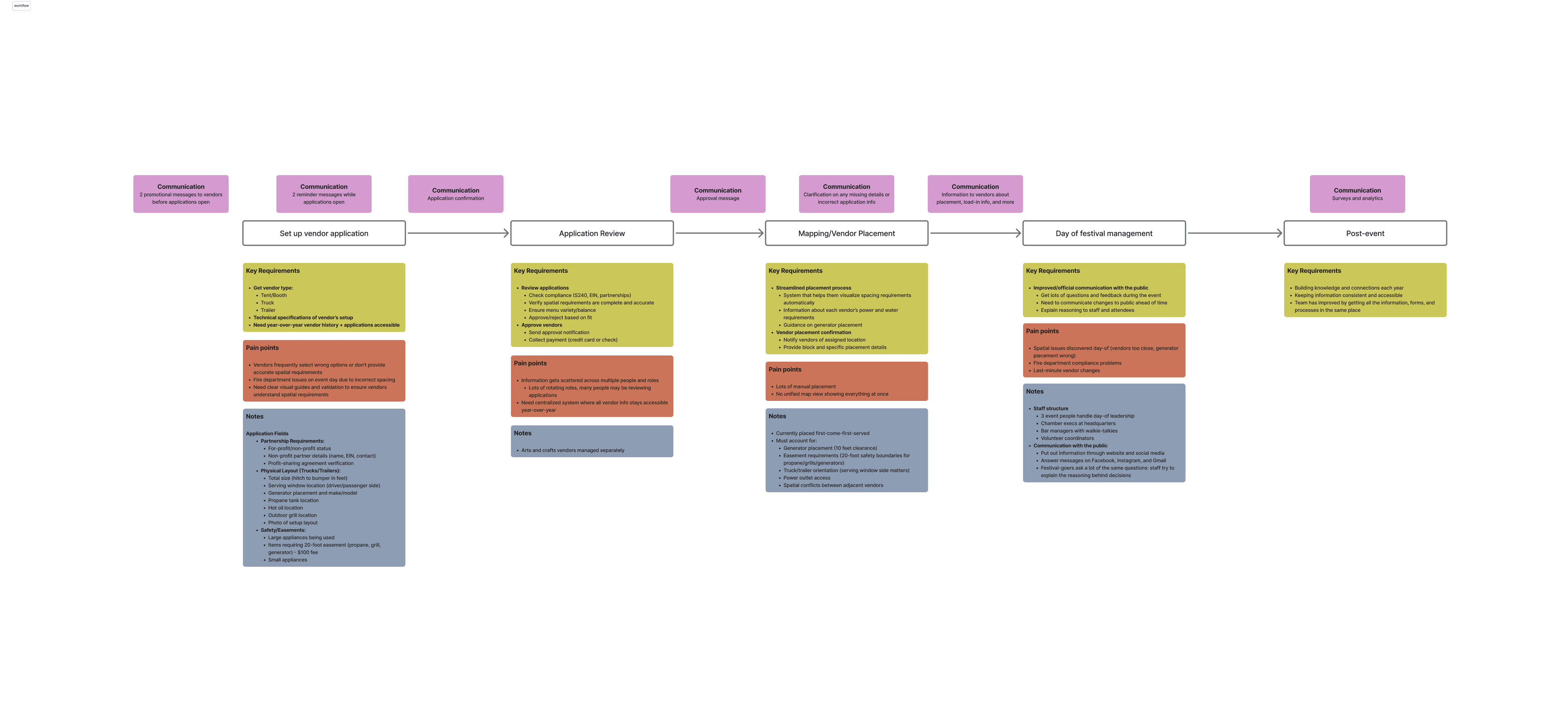
Image: A workflow diagram detailing a vendor manager's needs and pain points at every step of the festival lifecycle
Design Solutions
Design System
Our direction: Neon, upscale, and clean. Energetic and modern without competing with event imagery or overwhelming complex workflows.
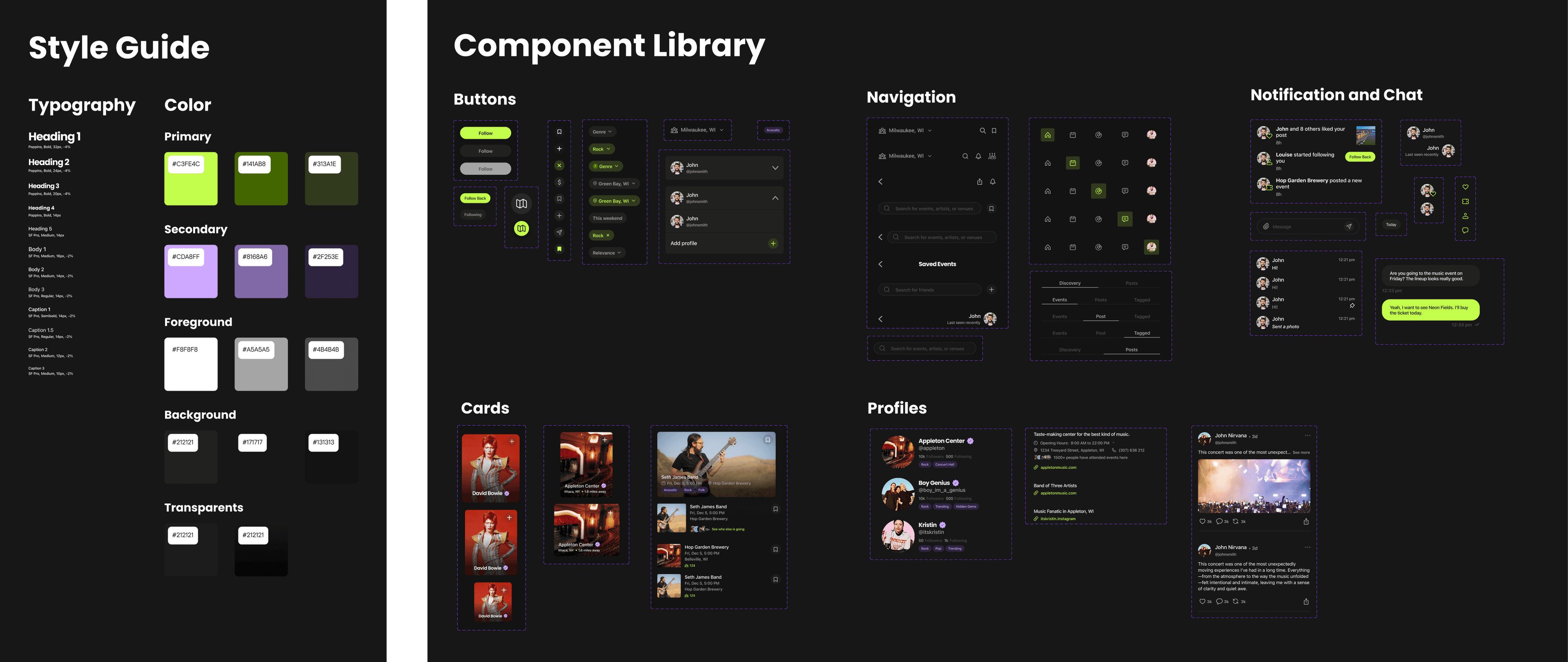
Image: The new style guide and component library for the mobile app
CRM Vendor Submissions & Status
The Problem
- Build application forms manually
- Review submissions across emails and spreadsheets
- Track approval status without central system
Our Solution
- Build reusable application templates
- Track vendor status in one place
- Communicate directly with applicants without leaving the platform
Video: New CRM vendor submissions workflow
Communication Platform (Day-Of Event)
The Problem
- Scattered communication across texts, walkie-talkies, and group messages
- No centralized system for updates
- Hard to respond quickly to changing situations
Our Solution
- Mobile communication platform connected to CRM event data
- Real-time coordination between organizers, staff, vendors, and volunteers
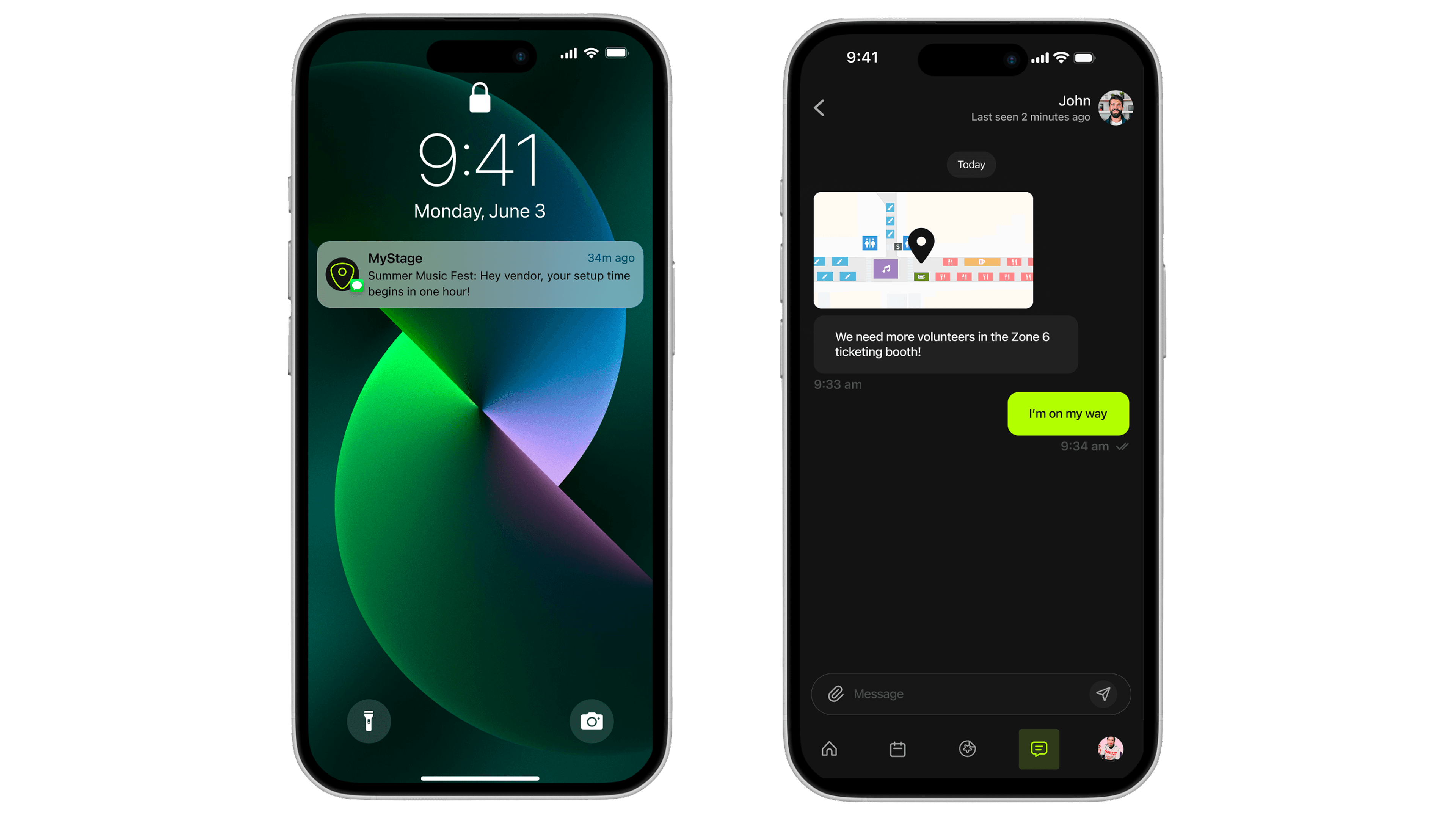
Image: Mobile communication platform for day-of coordination
Fan Navigation & Discovery
The Problem
- Hard to find event information and navigate large venues
- Difficult to discover vendors or performances that match their interests
Our Solution
- Mobile navigation and discovery features
- Interactive map for venue exploration
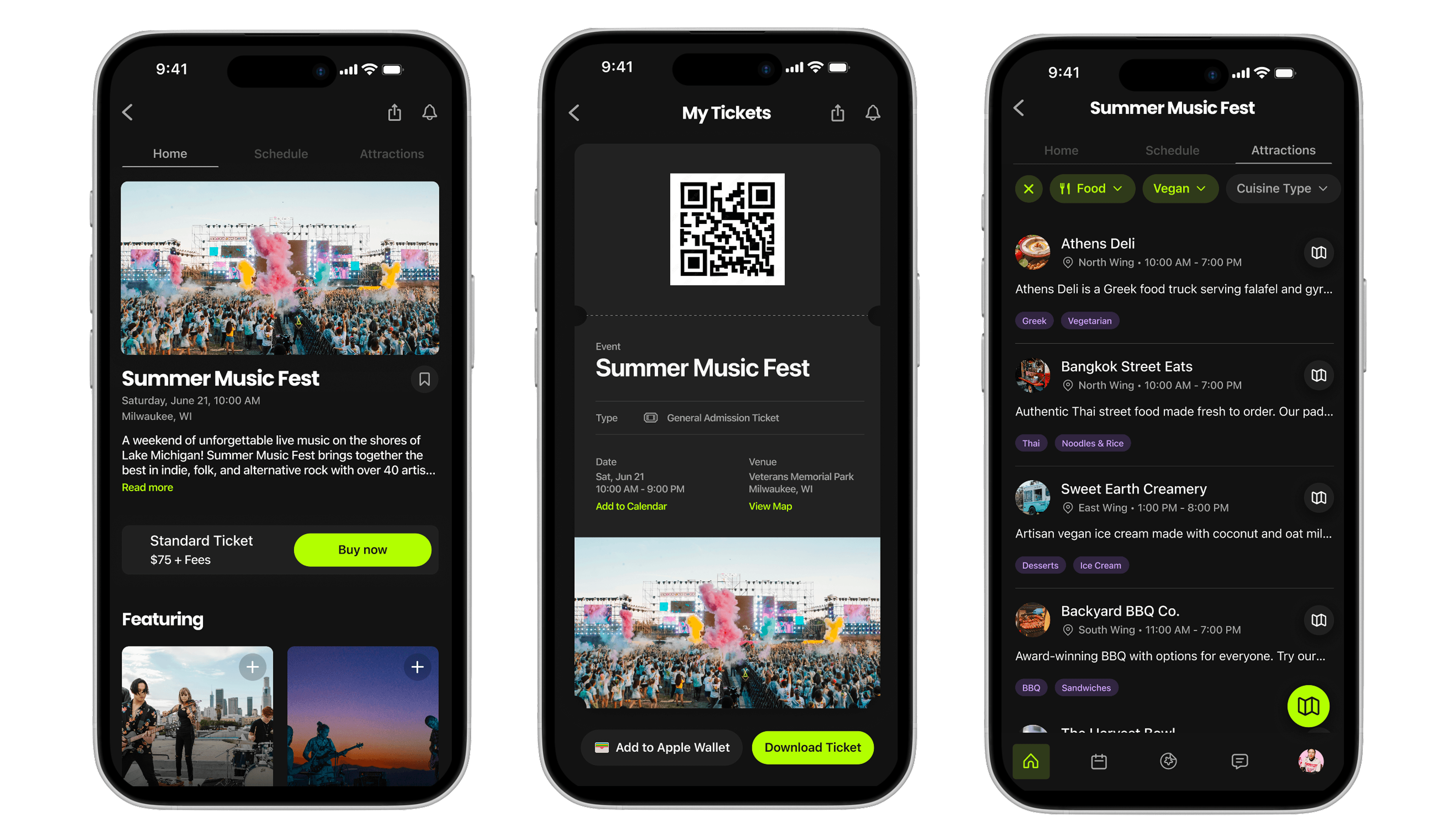
Image: Festival navigation and discovery features in the mobile app
Outcomes
We accomplished several key goals for MyStage:
- Clarified product vision by reframing the CRM and mobile app as connected products within a unified ecosystem
- Grounded design decisions in real festival workflows through organizer interviews and user flow mapping
- Created a cohesive design system to build off of
Next Steps
- Usability testing with festival organizers
- Refining the CRM userflows based on feedback
- Expanding mobile features for post-event retention and community engagement